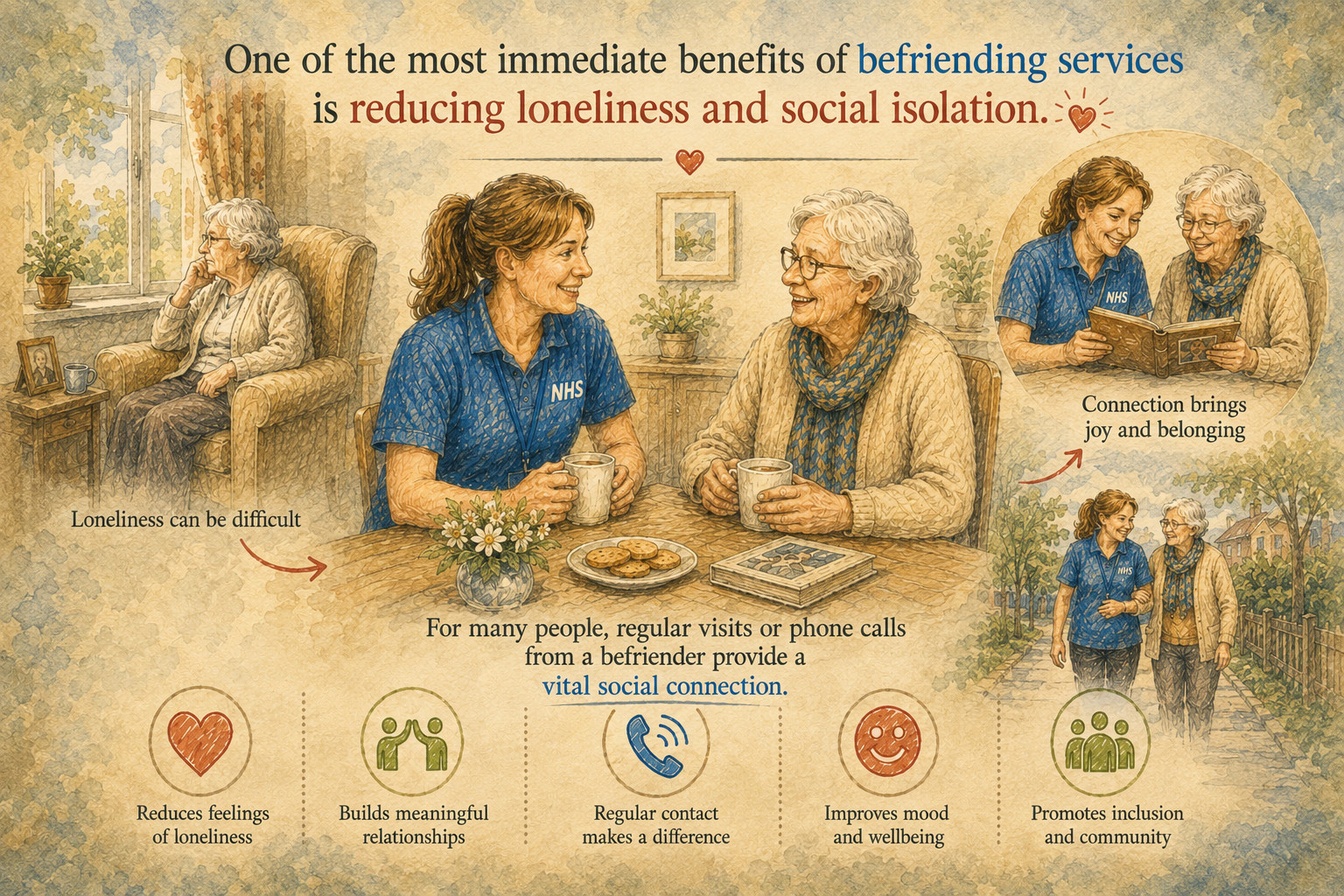
Befriending services provide a lifeline for many individuals in the UK, offering companionship, emotional support, and practical help. By addressing the issues of loneliness and isolation, these services play a crucial role in improving people’s mental and physical health. Furthermore, they help strengthen community connections and encourage greater social inclusion.
Befriending services can boost confidence and independence.
In addition, befriending services can boost confidence and independence, especially for older adults or vulnerable individuals who may struggle with daily life. Regular conversations and visits often give people something positive to look forward to each week. As a result, many individuals feel less anxious, more valued, and more connected to society.
Moreover, volunteers themselves often benefit from the experience. Not only do they develop communication and interpersonal skills, but they also gain a strong sense of purpose and fulfilment. Consequently, befriending creates positive relationships that benefit both the volunteer and the person receiving support.
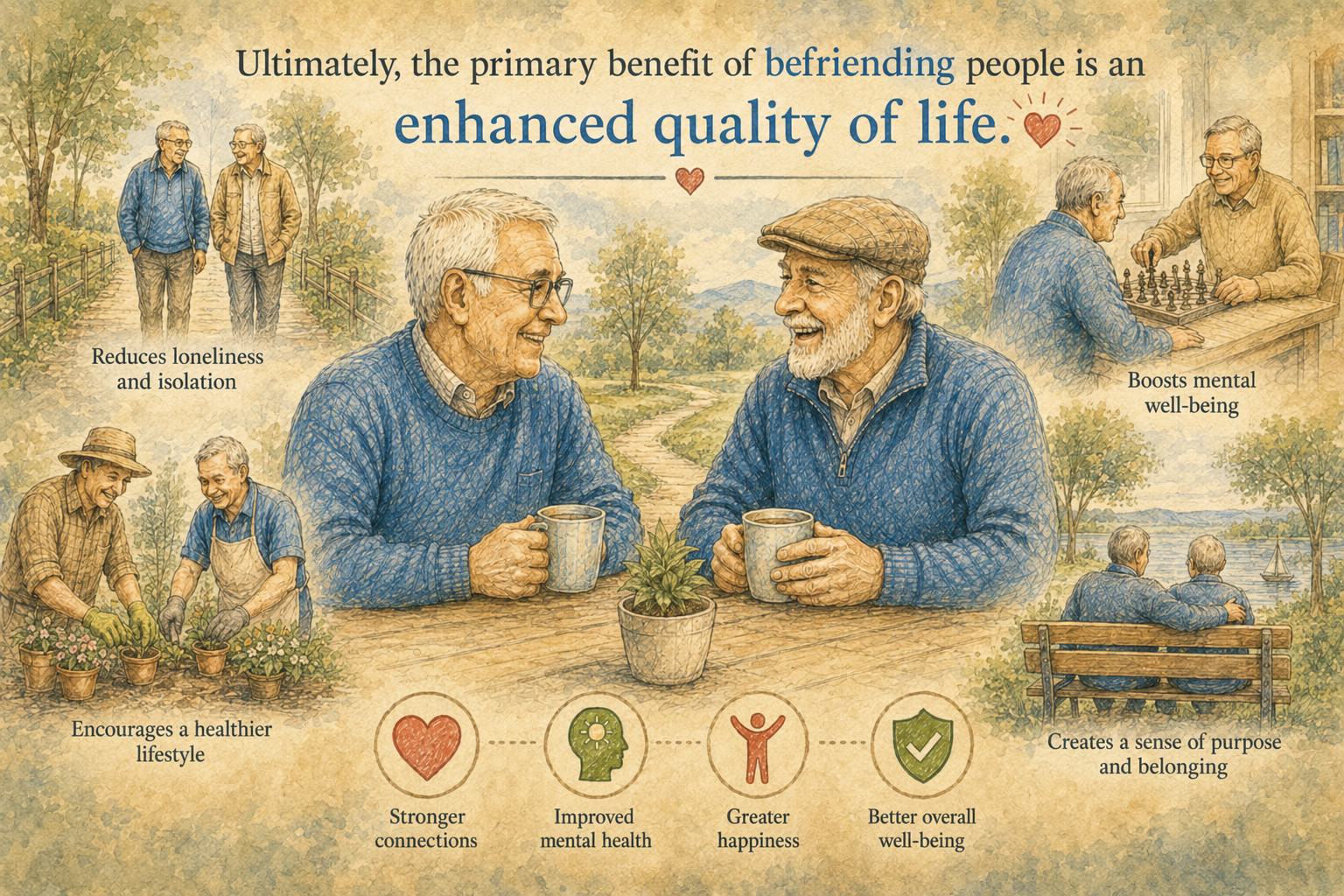
Ultimately, the primary benefit of befriending people is an enhanced quality of life. Regular social interaction, emotional support, and practical assistance contribute to a more fulfilling and enjoyable life. In particular, knowing that someone cares and is there to listen can make a significant difference to a person’s wellbeing and happiness.
Additionally, befriending services can reduce pressure on healthcare and social services because individuals often experience improved emotional wellbeing, greater resilience, and stronger support networks within their local communities over time.