Occupational Therapists
What do Occupational Therapists do?
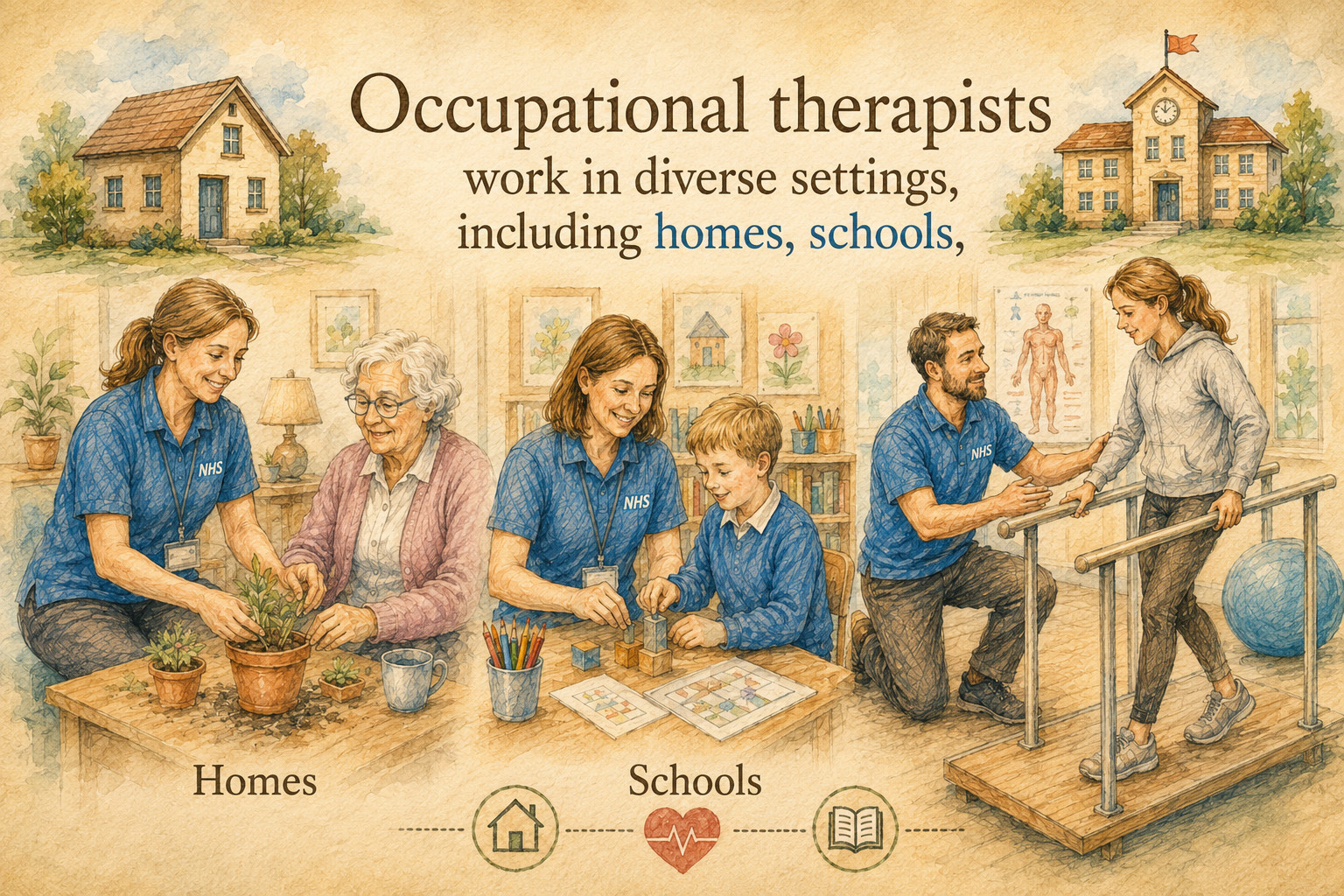
Occupational Therapists work in a wide range of settings, including homes, schools, workplaces, hospitals, and community centres. Their main goal is to help people achieve greater independence in everyday life.
Assessing an individual’s physical, cognitive, and emotional abilities helps therapists better understand their needs and challenges. Personalised support plans can then be created around specific goals. These may include dressing independently, returning to work, preparing meals, or managing a household safely. Please listen to our short audio about Occupational Therapists and the service they provide.

OT Services Explained
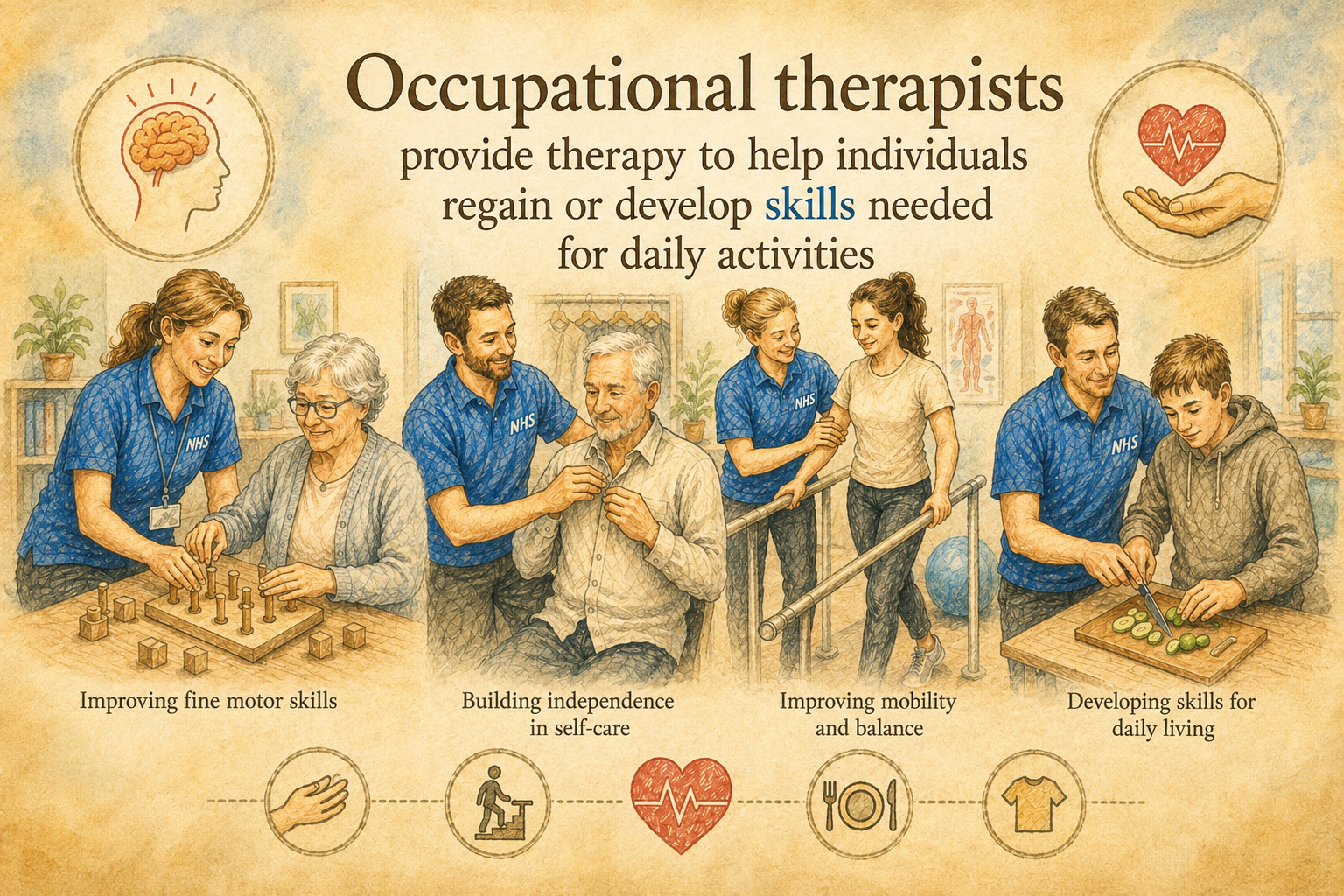
Practical therapy and support can also help people regain or develop important life skills. For example, therapists may help someone relearn everyday tasks after a stroke or injury. Children with developmental conditions may use play-based activities to improve motor skills, communication, and social interaction.
Support at home and in the community
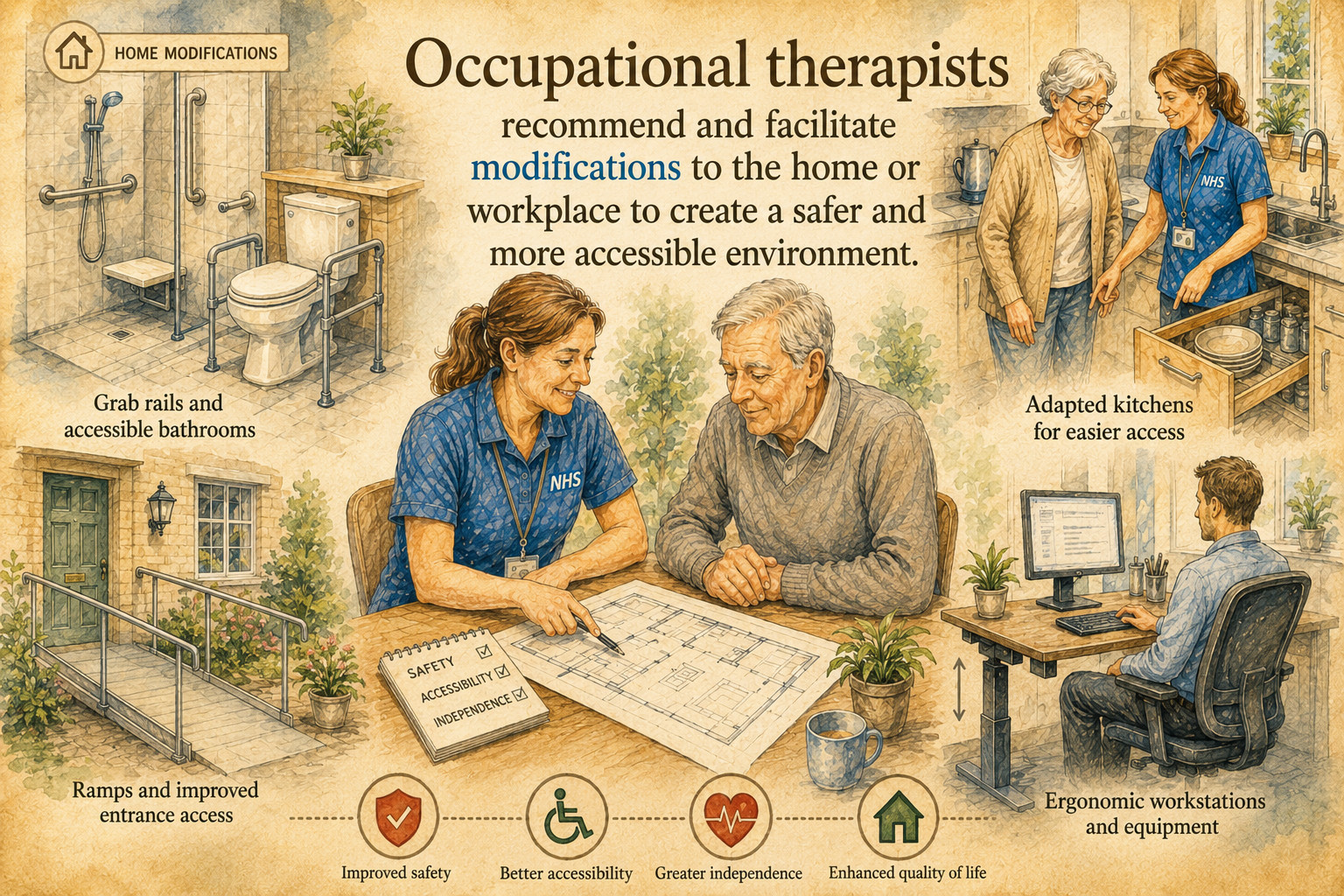
Occupational therapists can recommend changes to the home or workplace to create a safer and more accessible environment. This may include installing grab rails, suggesting specialist equipment, improving lighting, or rearranging furniture to reduce the risk of falls.
Many therapists also teach individuals and families practical ways to manage daily activities more effectively. In addition, OTs provide guidance and emotional support to carers who may be helping a loved one at home.
Occupational therapy can improve confidence, increase independence, and make daily life feel more manageable for many people. In many cases, small practical changes can have a significant impact on wellbeing, safety, and overall quality of life.
During difficult periods of life, occupational therapy may also provide reassurance and stability. Regular support from an OT can help individuals remain active, connected, and involved in their community. Through practical solutions and achievable goals, therapists help people maintain dignity, confidence, and a greater sense of control in everyday life.